I
live in Canada. In Canada, particularly in Ontario, I live amongst
people who come from different backgrounds. Does this mean that moral
values are relative? Let’s take the case of Honor killing. In some
cultures like those of Afghanistan and India, honor killing is being
practiced especially on females who have ‘wronged’ their fathers.
Relativists would say that since there is no such thing as absolute
morality, then ‘honor killing’ may be good or bad depending on the
culture and situation.
I
can understand why criminals are punished: they harm and kill people
with a malicious intention. I don’t think any relativist can ever say,
upon seeing their loved ones being murdered, that the act is relatively
good or bad. If they do, they must be extremely detached and insensitive
to human suffering and injustice. Perhaps, relativists are armchaired
philosophers who resist any show of or being affected by sympathy.
Since
murder (not killing) is evil in whatever context, then it implies that
we have a responsibility towards the others. Our responsibility towards
the others makes this ethical value absolute in whatever context.
So,
to speak of honor killing or to term it as such is a confusion of terms,
of responsibility or the sheer lack of it. Honor is “a perceived
quality of worthiness and respectability “. In which case, there is no
such thing as ‘honor killing’. For the man who killed his daughters just
because he didn’t like what the daughters did (which was to love a man,
or dress like a Westerner), he not only brought dishonor to himself but
also display a blatant disregard for human life. What he did was not
out of honor, but out of shame of being humiliated. He cared only for
his image and what his peers of the same mind would think of him. He
cared nothing for his daughters. Honor is about character, self respect,
self worth, despite what others say of himself.
A
man who has no respect for life cannot claim to have honor. A man who
cares only for his image of his self has no honor. A man who has no
worth has no right to speak of honor, in honor. What he did was simple
and plain murder, the malicious intention of killing a human being whom
he perceived as a means or an object for his own pleasure of ‘looking
good’ in the eyes of those who are equally sick.
Thou
shalt not kill; or, better still thou shalt not murder is a universal
ethics. It implies a universal respect for human life. Ethics is not and
should never be an object of cool and detached contemplation. It is
rather a subject to be reflected upon, to be thought of based on the
experiences of others who are in genuine pain. Only in this way, can one
feel the pain of the others as one painfully but meaningfully transform
the experience into a subject of genuine philosophical reflection.
Monday, January 30, 2012


Sunday, January 22, 2012
What glitters is not necessarily gold: The Golden Rule
I thought that the golden rule was simple and straightforward and anybody, who read these words, would know what the rule meant. Following it was a different story. Or, perhaps, it was not a different story. If people who understood the golden rule still got them wrong, then either they didn’t really understand the message, or that they showed no care for it.
At any rate, I took the message for granted and believed that the message was as easy as A, B, C. But I was wrong. Misunderstanding was prevalent.
For instance, someone - let’s name him Lucas - had told me that the golden rule applied only to his circle of family and friends. It did not count for those outside the circle. These outsiders, he argued, must first prove their worth to him. Their actions, however good or bad, were to determine his reactions towards the outsiders.
The golden rule states “Do unto others as you want others to do unto you.” This rule, Lucas says, applies to his circle of family and friends, but not to outsiders. Yet, he turned the rule on its head by arguing that: “Since they are outsiders, he treats them with suspicion (or unfriendliness). He expects that they would also treat him with suspicion. Hence, “since I treat the other with suspicion, I wouldn’t mind being treated with suspicion, for I would expect him to do so just as I would to him”.
"So, says Lucas, "If the other treats me unfairly, then I will treat him unfairly many times over. On the other hand, if he treats me with kindness, then I will render my kindness to him many times over".
This is how he understands the golden rule. He’s not the only one with that mindset. In fact, there are many of them. How do you understand the golden rule? Are you with him?
At any rate, I took the message for granted and believed that the message was as easy as A, B, C. But I was wrong. Misunderstanding was prevalent.
For instance, someone - let’s name him Lucas - had told me that the golden rule applied only to his circle of family and friends. It did not count for those outside the circle. These outsiders, he argued, must first prove their worth to him. Their actions, however good or bad, were to determine his reactions towards the outsiders.
The golden rule states “Do unto others as you want others to do unto you.” This rule, Lucas says, applies to his circle of family and friends, but not to outsiders. Yet, he turned the rule on its head by arguing that: “Since they are outsiders, he treats them with suspicion (or unfriendliness). He expects that they would also treat him with suspicion. Hence, “since I treat the other with suspicion, I wouldn’t mind being treated with suspicion, for I would expect him to do so just as I would to him”.
"So, says Lucas, "If the other treats me unfairly, then I will treat him unfairly many times over. On the other hand, if he treats me with kindness, then I will render my kindness to him many times over".
This is how he understands the golden rule. He’s not the only one with that mindset. In fact, there are many of them. How do you understand the golden rule? Are you with him?
Saturday, January 14, 2012
Atheists don't read stories that don't sell
Not
all atheists are alike. On the one hand, you have the hard core
atheists who demand that others, like believers, open their eyes to the
reality in which no deity can exist. God, they argue, cannot exist for
the simple and undeniable fact that evil exists. Religion is dangerous
and violent, and it’s time that people outgrow their psychological
dependence on their childish images of the old white bearded man in the
clouds.
On the other hand, you have atheists, like Alain de Botton, who recognize some merits to holding on to religion. To quote Alain de Bottom, Religion "teaches us to be polite, to honour one another, to be faithful and sober", as well as instructing us in "the charms of community". On Alain de Botton’s Religion for Atheists: “De Botton’s inspiring new book suggests that rather than mocking religions, agnostics and atheists should in fact steal from them. He boldly argues that the supernatural claims of religion are of course entirely false - but that religions still have some very important things to teach the secular world. “
In other words, religion, for the sympathetic atheists like de Botton, is socially useful. Without religion, there would be moral and social unrest that would spell the end of civilization.
But what does it mean for something or someone to be perceived as useful? For something to be useful, it serves a purpose outside itself. For example, the sharp pointed branch is useful in times of armed struggle, if one can not purchase a knife. The branch can be used for anything, e.g., killing, defending one’s self, or for any other use aside from killing, defending one’s self, such as sticking it deep into the ground to be used as a peg. Another example of use is when I treat another person as a means for my own selfish purposes.
Alain de Botton therefore perceives morality, as taught in religion, as a means for social cohesion. He means that the usefulness of doing good to to the other, is not performed for the sake of the person in front of me, but for the sake of keeping intact the group to which I, and possibly the other, belong. The act is right not because it is the right thing to do. It is right because it sustains the group.
I have no argument against those atheists if they are referring to a group of people who, out of fear or habit, attend mass every Sunday, or who act as Christians or Muslims or Jews because they’re conscious that others are watching their every step; or, who interpret the religious texts to their liking. In other words, I don’t mind at all when the sympathetic atheists like de Botton say that religion is useful for as long as they are referring to a group of people who manipulate religion to suit their psychological dependence. The idea that religion is socially useful is valid because people’s behavior made it so.
However, when you consider those believers who are psychologically independent, truth seekers who have no regard as to how Truth appears to them; those who perform genuine acts of self sacrifice, and who expect nothing, I repeat, expect nothing in return, not even salvation for their sakes, atheists keep mum about them, as though they don’t count. As though, they don’t exist.
I say this at least: these psychologically independent, highly spiritual beings exist. And, they, not the psychologically dependent ones, are the ones whom one should study and emulate to be able to understand what religion really is all about. So, why are they not being talked about? It’s simple: they, with the exception of the Dalai Lama, are not popular. They are few. They don’t make the news. For the media, they are stories that don't sell. And, atheists don't read them.
On the other hand, you have atheists, like Alain de Botton, who recognize some merits to holding on to religion. To quote Alain de Bottom, Religion "teaches us to be polite, to honour one another, to be faithful and sober", as well as instructing us in "the charms of community". On Alain de Botton’s Religion for Atheists: “De Botton’s inspiring new book suggests that rather than mocking religions, agnostics and atheists should in fact steal from them. He boldly argues that the supernatural claims of religion are of course entirely false - but that religions still have some very important things to teach the secular world. “
In other words, religion, for the sympathetic atheists like de Botton, is socially useful. Without religion, there would be moral and social unrest that would spell the end of civilization.
But what does it mean for something or someone to be perceived as useful? For something to be useful, it serves a purpose outside itself. For example, the sharp pointed branch is useful in times of armed struggle, if one can not purchase a knife. The branch can be used for anything, e.g., killing, defending one’s self, or for any other use aside from killing, defending one’s self, such as sticking it deep into the ground to be used as a peg. Another example of use is when I treat another person as a means for my own selfish purposes.
Alain de Botton therefore perceives morality, as taught in religion, as a means for social cohesion. He means that the usefulness of doing good to to the other, is not performed for the sake of the person in front of me, but for the sake of keeping intact the group to which I, and possibly the other, belong. The act is right not because it is the right thing to do. It is right because it sustains the group.
I have no argument against those atheists if they are referring to a group of people who, out of fear or habit, attend mass every Sunday, or who act as Christians or Muslims or Jews because they’re conscious that others are watching their every step; or, who interpret the religious texts to their liking. In other words, I don’t mind at all when the sympathetic atheists like de Botton say that religion is useful for as long as they are referring to a group of people who manipulate religion to suit their psychological dependence. The idea that religion is socially useful is valid because people’s behavior made it so.
However, when you consider those believers who are psychologically independent, truth seekers who have no regard as to how Truth appears to them; those who perform genuine acts of self sacrifice, and who expect nothing, I repeat, expect nothing in return, not even salvation for their sakes, atheists keep mum about them, as though they don’t count. As though, they don’t exist.
I say this at least: these psychologically independent, highly spiritual beings exist. And, they, not the psychologically dependent ones, are the ones whom one should study and emulate to be able to understand what religion really is all about. So, why are they not being talked about? It’s simple: they, with the exception of the Dalai Lama, are not popular. They are few. They don’t make the news. For the media, they are stories that don't sell. And, atheists don't read them.
Sunday, January 8, 2012
How should I approach the other when invited to a discussion?
There are 3 approaches. If I have left anything out, please let us know.
You are my enemy
I meet my enemy in a battleground. I call it a battleground because there is every intention of winning, and of making the loser look bad. In a battleground, there is at least one self centered individual or party who listens to no opinion but his. He has only one agenda, namely, to win the individual to his side. Any objection to his view (or, what appears to be an objection) is perceived as an affront on his set of beliefs, his personality.
Is there a loser? Yes: you have the loser who lost, the loser who won; and the biggest loser of all: truth that nobody seems to care about.
Socratic Method In this scenario, you are engaged with another person in a discussion. You listen and ask question while the other gives you his take on the topic. You are on the lookout for loopholes in his argument. You cross examine him on his assumptions and sets of belief. It's alright if you don't have the answer; but the whole point of this exercise is to get the other person to admit his state of ignorance and to eventually become humble. But, how many of us would be willing to admit how painfully ignorant we are about which we believe ourselves to be knowledgeable? I would say, very few – and this is because these few have in them, from the very beginning, a sense of humility; while the many felt, not humility, but humiliation. While this approach may work on some people, I wouldn’t apply this on someone with a big, fat ego.
Doctor-patient relationship In a doctor patient relationship, the doctor begins by posing some questions to the patient. The whole idea of this activity is to come up with the most accurate diagnosis. Unless, it is very clear what the patient is suffering from – for example, a simple, non chronic headache – then the doctor patiently continues with his questioning. With this tender approach and the doctor’s caring attitude, the patient learns to trust him. Patient desperately helps the doctor to help himself. In this assist-being assisted - if the cure is found - the patient is cured.
Similarly, you can help the person who is in search for a spiritual meaning in his life, by listening to his judgment about his life. His problem, I think, lies in his inability (or, fear) to see, objectively, how certain beliefs about himself or life in general, impedes him from considering adopting other beliefs that could expand his views, thus improve the quality of his experience.
For more discussion on this approach similar to this, click on philosophical counseling
I would love to read your comments.
You are my enemy
I meet my enemy in a battleground. I call it a battleground because there is every intention of winning, and of making the loser look bad. In a battleground, there is at least one self centered individual or party who listens to no opinion but his. He has only one agenda, namely, to win the individual to his side. Any objection to his view (or, what appears to be an objection) is perceived as an affront on his set of beliefs, his personality.
Is there a loser? Yes: you have the loser who lost, the loser who won; and the biggest loser of all: truth that nobody seems to care about.
Socratic Method In this scenario, you are engaged with another person in a discussion. You listen and ask question while the other gives you his take on the topic. You are on the lookout for loopholes in his argument. You cross examine him on his assumptions and sets of belief. It's alright if you don't have the answer; but the whole point of this exercise is to get the other person to admit his state of ignorance and to eventually become humble. But, how many of us would be willing to admit how painfully ignorant we are about which we believe ourselves to be knowledgeable? I would say, very few – and this is because these few have in them, from the very beginning, a sense of humility; while the many felt, not humility, but humiliation. While this approach may work on some people, I wouldn’t apply this on someone with a big, fat ego.
Doctor-patient relationship In a doctor patient relationship, the doctor begins by posing some questions to the patient. The whole idea of this activity is to come up with the most accurate diagnosis. Unless, it is very clear what the patient is suffering from – for example, a simple, non chronic headache – then the doctor patiently continues with his questioning. With this tender approach and the doctor’s caring attitude, the patient learns to trust him. Patient desperately helps the doctor to help himself. In this assist-being assisted - if the cure is found - the patient is cured.
Similarly, you can help the person who is in search for a spiritual meaning in his life, by listening to his judgment about his life. His problem, I think, lies in his inability (or, fear) to see, objectively, how certain beliefs about himself or life in general, impedes him from considering adopting other beliefs that could expand his views, thus improve the quality of his experience.
For more discussion on this approach similar to this, click on philosophical counseling
I would love to read your comments.
Sunday, January 1, 2012
A 10 Minute Drive: From Phenomenology To Situational Truth
I picked up Christopher from work. As soon as he got into the car, he asked me - as he always does - a philosophical question.
“Dad, what is the way to Truth?”
“What do you mean?” I asked
“Well, I’m not asking for the nature of truth,” Chris explained, “How does one deal with truth? I mean, how does one stay on the right path?”
“You’re asking for a certain way of finding the truth? An approach? A method?” I asked.
“Yeah, you can say that. Dad, you mentioned phenomenology the other day. What is it?”
It takes about 10 minutes from his work place to arrive home. How do you explain phenomenology in 10 minutes or less?
“Well, phenomenology is a method of understanding the essence of things, that is, the meaning for being what they are. Everyone has biases and prejudices, whether they are derived from studies or they are irrational. Some of these judgments are not false. Some are scientifically verified. But, these scientifically verified statements were formed from a standpoint that may have nothing to do with the essence of a thing.
By exploring an essence of a thing, I am referring to our immediate experience of an essence of a thing. By immediate experience, I mean, an unadulterated experience prior to the formation of biases and prejudices. To focus your attention on the immediate experience, you need to put aside or ‘bracket’ out these biases and prejudices. Bracketing them out does not mean that they are false or that you are skeptical of them. On the contrary, bracketing is a way of suspending your judgment as you go on your own finding the essence.. Eventually, some of them are taken into consideration after realizing that some of them may after all be part of the essence of a thing.”
“But, can we really let go of our biases and prejudices? Asked Chris, “We can try, but there’s no guarantee that we can put aside all of our biases and prejudices.”
“I don’t think that you or anyone can completely put aside your biases and prejudices, especially the ones that you’re blind to, despite your efforts. It’s the deeply rooted biases and prejudices that escape scrutiny. Now, is phenomenology a total failure? It depends on how you look at it. Insofar searching for the essence, I think phenomenology failed. However, I like its spirit, its intention. Phenomenology assumes that a lone individual can find the truth. That’s a problem. However, if you desire to be truthful, then you’ll realize that you can’t do it on your own. No one individual can.”
“What do you mean? Are you saying that an individual, a specially gifted individual like Gandhi, Mandela, Jesus, or Confucius, in his moment of silence, contemplation, of seclusion, didn’t discover the truth?” Chris was puzzled.
[It contradicts the common notion of a lone wise person, who leaves the pack and stays secluded for a number of years in a place known only to him, only to resurface and reconnect with the multitude who are in need of a moral compass.]
“Chris, I have no doubt that they have a great capacity for knowing the truth, more than most people. But do you think any of them has the monopoly of Truth? I am pretty sure that one knows something that the other has overlooked. Maybe, it’s my bias, but I consider them human beings. But, if you consider one of them to be a god, then I will just have to say, Amen. I cannot pretend to know what only the gods know.something. Socrates was aware of his ignorance.. He said: ‘I know nothing beyond this earth and below it. I only know what is human.’ Or, something to that effect. So, neither you nor II can talk or should want to pretend to know about things that only non human beings know. For instance, ‘is there life after life? It sure is tempting to say that it exists. In all honesty, I do not know about it the way I know my experiences and the steering wheel in front of me, and the driver’s seat I am sitting on, and you beside me, and home, and we’re just about 5 minutes away.”
So, let us talk about human beings, and limit ourselves to what they can know. I am pretty certain that every individual has his own set of biases and prejudices. All he can do is minimize their influence or at least be aware of them; Whatever he claims to be truthful will always be influenced by his history, background, education, to name a few. In other words, he can arrive at truthful statements that others can learn from him; but there will be others who, unlike him, have their own and equally valid interpretation. Each interpretation, it seems to me, has a blind spot that others can fill. Others, needless to say, have their own blind spots. Nothing wrong with blind spots. It is part of being human, limited to time and space.
I think it’s a humble way of looking at truth - that is, truthful statements - and of recognizing that there are various interpretations of a given situation. It’s a humble way because when you realize that no matter how honest and earnest you are in finding the truth (truthful statement) that you believe not only applies to you but to the others well, you will also learn the habit of being critical and open to other ideas.
“Well, we’re home.”
Chris got off first and head for the door. He has work the following day, and I am expected to pick him up. I don’t have to be fortune teller to know that, when I pick him up, he’s going to greet me with another question.
“Dad, what is the way to Truth?”
“What do you mean?” I asked
“Well, I’m not asking for the nature of truth,” Chris explained, “How does one deal with truth? I mean, how does one stay on the right path?”
“You’re asking for a certain way of finding the truth? An approach? A method?” I asked.
“Yeah, you can say that. Dad, you mentioned phenomenology the other day. What is it?”
It takes about 10 minutes from his work place to arrive home. How do you explain phenomenology in 10 minutes or less?
“Well, phenomenology is a method of understanding the essence of things, that is, the meaning for being what they are. Everyone has biases and prejudices, whether they are derived from studies or they are irrational. Some of these judgments are not false. Some are scientifically verified. But, these scientifically verified statements were formed from a standpoint that may have nothing to do with the essence of a thing.
By exploring an essence of a thing, I am referring to our immediate experience of an essence of a thing. By immediate experience, I mean, an unadulterated experience prior to the formation of biases and prejudices. To focus your attention on the immediate experience, you need to put aside or ‘bracket’ out these biases and prejudices. Bracketing them out does not mean that they are false or that you are skeptical of them. On the contrary, bracketing is a way of suspending your judgment as you go on your own finding the essence.. Eventually, some of them are taken into consideration after realizing that some of them may after all be part of the essence of a thing.”
“But, can we really let go of our biases and prejudices? Asked Chris, “We can try, but there’s no guarantee that we can put aside all of our biases and prejudices.”
“I don’t think that you or anyone can completely put aside your biases and prejudices, especially the ones that you’re blind to, despite your efforts. It’s the deeply rooted biases and prejudices that escape scrutiny. Now, is phenomenology a total failure? It depends on how you look at it. Insofar searching for the essence, I think phenomenology failed. However, I like its spirit, its intention. Phenomenology assumes that a lone individual can find the truth. That’s a problem. However, if you desire to be truthful, then you’ll realize that you can’t do it on your own. No one individual can.”
“What do you mean? Are you saying that an individual, a specially gifted individual like Gandhi, Mandela, Jesus, or Confucius, in his moment of silence, contemplation, of seclusion, didn’t discover the truth?” Chris was puzzled.
[It contradicts the common notion of a lone wise person, who leaves the pack and stays secluded for a number of years in a place known only to him, only to resurface and reconnect with the multitude who are in need of a moral compass.]
“Chris, I have no doubt that they have a great capacity for knowing the truth, more than most people. But do you think any of them has the monopoly of Truth? I am pretty sure that one knows something that the other has overlooked. Maybe, it’s my bias, but I consider them human beings. But, if you consider one of them to be a god, then I will just have to say, Amen. I cannot pretend to know what only the gods know.something. Socrates was aware of his ignorance.. He said: ‘I know nothing beyond this earth and below it. I only know what is human.’ Or, something to that effect. So, neither you nor II can talk or should want to pretend to know about things that only non human beings know. For instance, ‘is there life after life? It sure is tempting to say that it exists. In all honesty, I do not know about it the way I know my experiences and the steering wheel in front of me, and the driver’s seat I am sitting on, and you beside me, and home, and we’re just about 5 minutes away.”
So, let us talk about human beings, and limit ourselves to what they can know. I am pretty certain that every individual has his own set of biases and prejudices. All he can do is minimize their influence or at least be aware of them; Whatever he claims to be truthful will always be influenced by his history, background, education, to name a few. In other words, he can arrive at truthful statements that others can learn from him; but there will be others who, unlike him, have their own and equally valid interpretation. Each interpretation, it seems to me, has a blind spot that others can fill. Others, needless to say, have their own blind spots. Nothing wrong with blind spots. It is part of being human, limited to time and space.
I think it’s a humble way of looking at truth - that is, truthful statements - and of recognizing that there are various interpretations of a given situation. It’s a humble way because when you realize that no matter how honest and earnest you are in finding the truth (truthful statement) that you believe not only applies to you but to the others well, you will also learn the habit of being critical and open to other ideas.
“Well, we’re home.”
Chris got off first and head for the door. He has work the following day, and I am expected to pick him up. I don’t have to be fortune teller to know that, when I pick him up, he’s going to greet me with another question.
Tuesday, December 27, 2011
Imagination and Morality
Read a book, listen to a story that someone’s telling, watch a movie, and
if they’re any good, you’d be moved to tears, inspired, touched, angry;
and you want to do something to make a change for the better. This is
what a story does to you. But, it also appeals to your imagination. It
is the only faculty, not reason, that allows you to enter the world of
another human being. Story telling and imagination are powerful
combination. Without a story, moreso, without the ability to imagine,
life would be meaningless, unconnected dots of facts. Want to know what
it’s like? Just look at any statistics or a resume of someone who’s
looking for a job. You don’t feel a thing. You are detached - a high
wall that bars you from seeing people other than statistics on a graph.
Imagination opens you up to a world that isn’t yours. Imagination allows you hear not just their stories, but their heartbreak, their sorrows, their joys. I had just finished reading a news about a 9 year old girl, murdered by a family friend. It is awful to die during Christmas season only because it is the time - I want to believe - when no crime is committed. I turned the page. Her death was just another news amongst countless news unrelated to me, my life. Imagination could have made the death of a beautiful child my own story if I chose to weave a story out of it.
Moral values are like news. We all know that ‘Do unto others as you want others to do unto you’ makes sense only if we are a victim of injustice. The golden rule applies when I am involved, when I feel that I have been wronged.
We are taught the golden rule. But, we have all taken it to apply to ourselves and not to the others.
We are taught that the golden rule and other ethical codes are the principles of reason, not of emotion. So, the teaching of the golden rule and other ethical codes are treated in the same way science and mathematics are presented.
But, this is very wrong.
Moral codes are emotion based that are best presented to the imagination by way of a story. If we were taught this way, then we would be receptive to the world of other persons. Only then will we be able to see ourselves in the light of their stories. Moral teachings/stories aren't just about ways of fulfilling one’s happiness. They are there for us to reach out to the other, to go beyond our limited and limiting perception, bias and prejudice. And, only then are we able to correct ourselves and follow the golden rule and other ethical codes - for it matters not to us, but to them as well.
Imagination opens you up to a world that isn’t yours. Imagination allows you hear not just their stories, but their heartbreak, their sorrows, their joys. I had just finished reading a news about a 9 year old girl, murdered by a family friend. It is awful to die during Christmas season only because it is the time - I want to believe - when no crime is committed. I turned the page. Her death was just another news amongst countless news unrelated to me, my life. Imagination could have made the death of a beautiful child my own story if I chose to weave a story out of it.
Moral values are like news. We all know that ‘Do unto others as you want others to do unto you’ makes sense only if we are a victim of injustice. The golden rule applies when I am involved, when I feel that I have been wronged.
We are taught the golden rule. But, we have all taken it to apply to ourselves and not to the others.
We are taught that the golden rule and other ethical codes are the principles of reason, not of emotion. So, the teaching of the golden rule and other ethical codes are treated in the same way science and mathematics are presented.
But, this is very wrong.
Moral codes are emotion based that are best presented to the imagination by way of a story. If we were taught this way, then we would be receptive to the world of other persons. Only then will we be able to see ourselves in the light of their stories. Moral teachings/stories aren't just about ways of fulfilling one’s happiness. They are there for us to reach out to the other, to go beyond our limited and limiting perception, bias and prejudice. And, only then are we able to correct ourselves and follow the golden rule and other ethical codes - for it matters not to us, but to them as well.
Monday, December 12, 2011
Free Will or Freedom?
Does free will exist? Is it
an uncaused cause?
It sure feels like I have a free will. I don’t feel coerced
to doing something that I don’t want to do. If I were coerced then I would rationalize that
my free will has been curtailed by an external force. Curtailed, yes, but not
taken away, for free will, it is assumed, is innate.
However, psychologists and philosophers have become quite wary about our ‘feeling
that we are free’. In “Is Free Will an Illusion?” Shaun Nichols writes:
Yet psychologists widely agree that unconscious processes exert a powerful influence over our choices. In one study, for example, participants solved word puzzles in which the words were either associated with rudeness or politeness. Those exposed to rudeness words were much more likely to interrupt the experimenter in a subsequent part of the task. When debriefed, none of the subjects showed any awareness that the word puzzles had affected their behavior. That scenario is just one of many in which our decisions are directed by forces lurking beneath our awareness.
This argument is not
new. In the 20th century, Behaviorism revealed that those ‘forces
lurking under our awareness’ were determined by operant conditioning. If one
was to be exposed to certain stimuli again and again, one would react in a
certain way again and again. One's behavior would become a ‘habit’ and it would feel as though
there were no external forces curtailing one’s sense of freedom.
We could spend the
whole time arguing for and against the existence of free will. But, hasn’t
anyone yet realized that whatever the outcome, it does not really matter? Whether this argument or that argument could
show you – its validity, it is still an argument that has no proof or hard evidence.
Here’s what I know:
I value freedom because I value human dignity. Humans fought against slavery
because they are subjects, beings of intrinsic values. They are values in
themselves. I don’t just believe in these ideas; I see actual people standing
up for themselves, fighting and defending their rights, their human
dignity. And, when they retain and
regain their human dignity, they are free.
So rather than saying that you have a free will (innate), why not describe freedom as an act? Wouldn't you feel that you have accomplished something valuable when you succeeded in overcoming an obstacle, be it physical or psychological, or spiritual? Let us think about it. For as long as you view freedom as an act of overcoming a resistance, then you will stand up and do something about your situation rather than enjoy complaining about 'how hopeless your situation is'.
So rather than saying that you have a free will (innate), why not describe freedom as an act? Wouldn't you feel that you have accomplished something valuable when you succeeded in overcoming an obstacle, be it physical or psychological, or spiritual? Let us think about it. For as long as you view freedom as an act of overcoming a resistance, then you will stand up and do something about your situation rather than enjoy complaining about 'how hopeless your situation is'.
Friday, December 9, 2011
Not To Have A Soul, But To Be Soulful
Describe the soul or the mind as an immaterial thing, and
the body as a material thing, then you will have to explain how these two
entirely different entities ever get to interact, if they ever did. Is the soul
‘inside’ the body? A pencil is in the box. That makes sense. I see that. Both
pencil and a box are material things that take up space. As an immaterial
thing, the soul does not take up space. So, it does not make sense to say that
the soul is ‘inside’ the body. Where is the soul? That question, too, does not
make sense because only material things can be located in specific areas.
Stumped by this problem, you’re forced to make a choice
between being a materialist or an immaterialist. An immaterialist believes that all that exist
are ideas. While a materialist believes that all that exist are material
things. That is, you will either deny the existence of a thing outside the
mind, or affirm the existence of a thing outside the mind.
But we don’t have to be ruled by those terms and
definitions. We needn’t be. We shouldn’t be. I would like to free ourselves from
these definitions and experience for myself what it means to exist.
Indeed I do experience the world as existing outside of me,
at the same time, I do experience something in me that is not of material
texture. I do not have to assume that the material thing such as my body, and
the immaterial thing such as my soul as two entirely different entities. Why
can’t I acknowledge the physical pain and pleasure that I derive directly from
my experience of material things, while recognizing the fact that I feel joy
and suffering without the accompanying physical pleasure or pain? Indeed, I
can. And, that’s because you and I do encounter such experiences.
Does not the body sense something other than what is
experienced by any or all of the five known senses? Do I not experience the
‘beauty’ of the waterfall or the sunset? Don’t I experience suffering through
the body by way of physical aches, as I suffer through, for example, the loss
of hope or a loved one? Certainly, I encounter these experiences through the
body and my soul. These experiences cannot be denied. The body feels what I
think; and the soul thinks what is felt through the body.
Are we still going to get enmeshed in the problem of
interaction? Not unless, we rectify the description of soul and body. How? The
way out of this abstract, misconstrued problem is to describe the soul as a
certain kind of experience. When we watch the musician play his instruments, do
we not say “He plays with so much soul”? Compare him to someone who is great
with techniques but lacks soul in his rendition of a song or music.
A murderer is said to be a man without soul? How is ‘soul’
taken here, but as a state of being or experience? We read his body language
and we pick up something that none of the five senses can ever perceive. For
example, the look or the stare or the ‘angry’ eyes of a father, who said not a
word.
The ‘soul’ is an adjective, a state of being. We describe a
person (or, ourselves) as being soulful by the way he moves, he understands, shows compassion,
radiates a light of hope when everything seems to be lost. Soul is not a thing
like a table or a chair; but the experience of a carpenter who carves wood in a
way the admirer remarks, “this table has character.”
Ought we then long for the life after this life? Is the soul
immortal, immune to physical mortality? Perhaps, when we speak of a person
‘having soul’, or is a soulful being, it is telling us how a life is lived. For that, it does not matter how long one has lived, but how well he has lived.
Saturday, December 3, 2011
The Living Truth
Truth is very difficult to define. So let us take up some examples of truth, or of how we use the word, 'truth.'
Mathematical truth. "Two plus two" is equal to "four." We say this is true. The opposite is false when we say "two plus two" is equal to "three."
Empirical truth. If I say "I have an elephant in my shirt pocket', then it is false because it is an empirical fact that there is no elephant in my shirt pocket. It is a fact and true when I say that there is a pen in my shirt pocket. This is an empirical truth because anyone, not just me, can see that there is a pen in my shirt pocket.
Biblical truth. If I say that "Christ is merely a man, not a son of God," then it is false because Christians believe that Christ is the Son of God, born without sin. While mathematical truth is based on logic, and empirical truth is based on the senses, biblical truth is based on one's faith. We can say that different truths have different bases.
There is another meaning of truth that is not necessarily based on the aforementioned. This truth is derived from, and created by, one's life. It is a truth that enables one to realize more of his or her nature and destiny. However, this truth is extremely difficult - and, at times, dangerous -to discover because it requires that one has to first accept one's ignorance, that is, that one does not know everything. Not everyone is willing to accept one's weaknesses. Everyone likes to know his or her strengths. Everyone wants to show off his or her strengths. Unfortunately, many cringe at the sight of their weaknesses. Knowing their weaknesses are actually a big step to knowing their selves. It takes moral courage to face them.
Many of us are afraid to know the 'dark side' of one's personality because we have something to hide from the others especially from ourselves. Through the years, we have built up an image of ourselves that we show to other people and to ourselves. This is a false image, a pretension. And it takes so much time and energy to keep up that façade that we actually become weary and stressed out. Furthermore, we become defensive when we sense that people can see through the façade (mask). The more masks we wear, the more we don't know ourselves; and the more we become ignorant and arrogant.
Why do we wear masks? Why do we lie to ourselves and to the others? We lie because we depend on the approval of the others. We want people to like us. There is nothing wrong with that. But, people might like us for the wrong reasons. And worst of all, we might love ourselves for the wrong reasons.
How do we free ourselves from all of these wrong reasons? How can we allow others to accept us for who we are? The answer is to first accept who we are. So, when we have humbly accepted our strengths and embraced our weaknesses, people will (eventually) accept and respect us for who we are. As a result, the truth about who we are sets us free to be who we are and can be.
Monday, November 21, 2011
Philosophy, God, and Honesty
Fear, Vengeance, and Conformity
Some of us had the
misfortune of questioning the existence of God. I say misfortune because
questioning the existence of God can cause stress and anxiety, but more
importantly, a loss of innocence. One wished one had not been too aware of the
contradiction between what people believe in and what they do. They believe in
a God that is all good, and that teaches to do good even to our enemies. Yet,
those same believers do the very opposite as soon as they step out of the
church. One wished one had not been aware of the discrepancy. For that leads to
other questions that could threaten their peace of mind.
For instance, one
asks: "Why do I have to go to mass? It does not make sense to me. We
follow those rituals and people kneel and mutter words 'Our Father who art in
heaven...' without truly understanding the meaning."
One observes that
people go to mass because it is Sunday, and we, Filipinos, are predominantly Catholic; and not going to mass will cause bad karma.
One observes people
praying for their safety, and the assurance that their future would be exactly
what they had prayed for: protection from murderers, untimely accidents; and
financial stability. If they are into lottery, they pray hard to win $20,000,000
at least that could secure their financial for the rest of their lives.
One observes that
the priests and religious laymen claim to have a special access to God's mind:
they know, with great certainty, what God has in His mind. And, given that,
they privileged themselves with the power to command loyalty from their own
fellowmen. They are also sure that other religions are inferior to the Catholic
faith that they lambast the non-Chrisitian for not accepting Jesus Christ as
their one and only savior.
You turn on the
t.v. to a channel you did not intend. But, you stay on for awhile because the
t.v. evangelist was talking about how God can provide you the money you could
have ever dreamed for, if only you pray for it. Seek and shall be yours. Ask
for money from God, you'll get it.
You notice, too, that many of those who
take religion seriously are those who are 'young at heart'. They feel their
body aching every day. Gone were the days when they could jump and feel no
pain. Pain reminds them of their frailty, of their mortality. "Life is
short', they say, 'but I do not want to believe that this earthly life is all
there is. There must be something else, something beyond the grave"
In other words, you
notice that people believe in angels and devils and in a supreme god out of
fear, vengeance, and conformity. And, you wished that you had not been too
aware of this. Innocence is sweet, and peaceful. Yes, you feel physical pain
when you accidentally trip and fall to the ground; but you don't lose sleep
over it because 'it's a small thing'. You can recover from it. However, the
loss of innocence targets your heart and mind. The pain you feel is not
physical, but emotional and mental. It does not go away that easily. Sometimes,
it does not go away. For some, it never does. That's because you, too, once
believed out of fear, vengeance, and conformity. You should have been like
'everybody else.'
Philosophical
explanations
Bertrand Russell (1872 - 1970) was a
mathematician, logician, political theorist, educationist, ethicist, and
a social critic. He is an atheist, who once was a Christian believer. In his
book, Free Man's Worship, he writes:


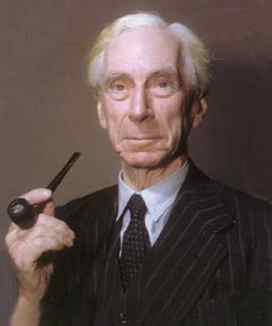 |
| Bertrand Russell |
Religion is based, I think, primarily and mainly upon fear. It is partly the terror of the unknown and partly, as I have said, the wish to feel that you have a kind of elder brother who will stand by you in all your troubles and disputes....A good world needs knowledge, kindliness, and courage; it does not need a regretful hankering after the past or a fettering of the free intelligence by the words uttered long ago by ignorant men.
People cannot bear
not knowing what the future would be. It is true that people are aware of the
fact that they cannot know the future. Their mortality and human frailty
reminds them time and again the size of their brain. And, it is this reminder
that they experience their greatest fear of the Unknown. "What lies in
the future? No, what really lies in the future? I know that I don't
know, but I want to know." Religion provides the consolation
they desire, not the truth.
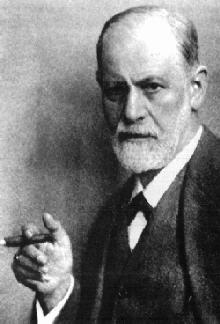 |
| Sigmund Freud |
Another thinker, with a scientific
background, explains this phenomenon. The founder of psychoanalysis, Sigmund
Freud (1856 -1939), delves deeper into the recesses of the human mind, and
discovers the Unconsciousness. Freud argues that much of what we
consciously do is determined by the workings of the unconsciousness. Freud
claims that our so called good intentions are greatly influenced by our most
basic instincts, namely, sex and aggression. In his book, Totem and Taboo,
Freud theorizes the origins of religion. The father of a tribe, whose sons envy
the father's access to the tribe's women, plans out to overwhelm and kill him.
Despite their success, the sons fail to fulfill their desire to emulate their
father, due to competition amongst themselves. Thus, religion arises out of
frustration - to emulate their father - and guilt - for killing the father. The
process is the same for all societies, be they Western or Eastern. Eventually,
in the face of helplessness and guilt, mankind creates a god. In Freud's view,
the 'created' God is a projection of the unconscious mind. This explanation is
based on Freud's observation of children who feel helpless and guilty, and who
needed a figure (figure of authority) to protect them from harsh reality.
Religion, in other words, is a childish delusion.
To put Freud's
theory in another way: all of us, as children, experienced fear in something
that we do not know. We also experience things and people who can harm us. Our
only means of survival is throw ourselves to our father, who appears to us
children as the most powerful, most admirable being in the world. As we grow
up, although we still admire and love and respect our fathers, we have outgrown
the father. But we have never outgrown our fear of the Unknown. We feel the
awesome power of the storm, the earthquake, death. We seek a more powerful
figure of authority, a father figure, the creator of these natural events.
Isn't it a surprise why god is considered a male?
Is
there a way out?
Despite these
philosophical attempts at explaining our 'weekly' observations of people who
cling to god; who go to mass every Sunday; who don't practice what they preach,
is there a way for you, the reader, to free yourself from fear, and to believe in
a god? That is, is it possible for one not to fear the unknown and be able
to believe in a god? Is god real, not a creation of one's mind? Is there a god
apart from me?
But, why believe in
a god? Many, like Bertrand Russell, reason that one should not believe in a god
for religion oppresses his individuality, his freedom to be what he can be.
Should one decide not to believe in a god, just because he does not want to be
oppressed? Should we bet on God's existence?
Blaise Pascal (1623 – 1662) a
Christian apologist argues that, if reason fails you to make up your mind on
whether or not to believe in God, then let us wager. He writes:

 |
| Blaise Pascal |
But there is an
eternity of life and happiness. And this being so, if there were an infinity of
chances, of which one only would be for you, you would still be right in
wagering one to win two, and you would act stupidly, being obliged to play, by
refusing to stake one life against three at a game in which out of an infinity
of chances there is one for you, if there were an infinity of an infinitely
happy life to gain. But there is here an infinity of an infinitely happy life
to gain, a chance of gain against a finite number of chances of loss, and what
you stake is finite. It is all divided; wherever the infinite is and there is
not an infinity of chances of loss against that of gain, there is no time to
hesitate, you must give all...
What have you got
to lose if you decide to believe in God? If you decide not to believe in God,
and should God exists, you lose everything, including immortality of life. If
you decide not to believe in God, and should there be no God, then you lose
nothing. Believe in God, and there is a god, then you win everything, including
immortality of life, and a chance to live in heaven.
Being
Honest
As for me, I'm not
entirely sure that this is the way out. This would not give the peace of mind
that I am looking for. So, let me propose what I think is a way out. Here is
the situation.
Say that I believe in a God because I am
afraid for myself, I seek God's punishment for those who wronged, and because
many people believe in God. Say that I also believe in a God on the basis of a
wager. I die. I become a soul. I see myself rising out of the body, rising
higher and higher, and I see Peter at the gate. I greet him, but he greets me
with book of my life. All that I have done Peter knows, is written in that
book. Peter smiles. He looks up and says, " You have bet on God's
existence. You believed that you believe in Him, because you are afraid for yourself.
And, you follow the rules just as anyone would knowing that he's being watched.
In other words, you are not honest in your belief." Am I then barred from
entering through the gates of heaven because I have been dishonest? I'll leave
that for you to decide.
In another situation, much as I tried, I
could not get myself to believe in God, for that would be dishonest. I die.
There is heaven. There is God. There is Peter waiting for me at the gates of
heaven. He greets me, then he reads the records of my life. Peter knows that I
don't believe in God. But, Peter also knows that I have been fiercely honest
with myself. If peter admires honest people, he should allow me to go through
the gates of heaven. But, does he? I'll leave that for you to decide.
Philosophy
and the issue of God
It would have been a
nice ending to our spiritual journey if there indeed is a God, and I have been
honest about believing in a supreme being. But that would be wishful thinking
on our part. We are serious. We took up this issue because it matters a lot to
us. Unlike the others who question God out of anger or resentment, we decided
to take up the issue because we desire to know. We may not come to know THE Truth,
but at least we are sincere, because we are driven by our desire for truth.
Friday, November 18, 2011
Deadly Oneness of Truth
Should we still be insisting on - what more, be believing in - the absoluteness of truth? Could we ever arrive at one conclusion
so everyone could finally live in peace with one another? Or, were we all
destined to wage war for all eternity until the there is only one man left
standing? Is such a notion of truth dangerous?
Truth, it was said, is One and Absolute, and
independent of the knower. Truth, of this kind, depends not on what the knower
thinks it is or should be. The knower, to know the truth, must align himself to
it. He must be ready to receive its light. Truth, it was conceived, is timeless and
quite objective. However, only a few are privileged to know such a truth. And they announced it to the 'underprivileged' which make up the great majority of the human population.
The 'underprivileged many' was attracted to such a notion of truth. So intense were their emotions that they believed to have seen the Truth. Truth, they
argue, is on their side. And, they would insist on it, even wage a holy war if
need be. Indeed they have waged holy wars amongst
nations, communities and in their neighbourhood. Such is the social and political consequence of believing in the notion that Truth is the One and the Absolute.
It’s not a matter of (a) fact
Truth, many believe, is a fact to which they
add: it is an undeniable fact. But,
that's confusing the two terms.
 Is it a fact that a big, unusual looking
bone an evidence of evolution? Sure, if you’re a
paleontologist or a believer in the theory of evolution. To someone who does
not share your belief, the big unusual looking bone is not a proof of
evolution. If two or more persons see the same thing in two different ways, then there is a distinction between a fact and a truth. Let me explain.
Is it a fact that a big, unusual looking
bone an evidence of evolution? Sure, if you’re a
paleontologist or a believer in the theory of evolution. To someone who does
not share your belief, the big unusual looking bone is not a proof of
evolution. If two or more persons see the same thing in two different ways, then there is a distinction between a fact and a truth. Let me explain.
Truth is not equated to a fact, and vice
versa. Something becomes a fact when it fits into the story you believe in.
Something is true because it intensifies your involvement in the story, your
story. It is the story that causes a fact to rise up and present itself as true. This is the power of the story for it gives birth to the notion of truth. There is no truth outside a story. Without a
story we would not be able to make sense of the world and the things that
happen in it. We could not utter the word 'truth'. (A world, interestingly, is created through and by a story.)
Tell Stories, not the truth
The conflict between individuals and groups then is not a quarrel about
whether truth is absolute or relative. The conflict, which oftentimes ends in
violence, is the failure on our part to realize that what’s being told is a
story. Can you say that a story is (the) truth? After reading a book of fiction,
and remarking that 'it is so true', are you then not enlightened? Someone's story expresses your story, and deepens and widens the quality of your story, your life. And, it does without telling the truth.
Just as there are many communities there are many stories. Stories are meant to be told and to be listened, to, and the chance to acquire deeper appreciation and understanding of the world and ourselves.
When was the last time you listened to a story?
When was the last time you listened to a story?
Wednesday, November 16, 2011
God and Theory of Evolution: Can they co-exist?
 To say that 2 or more things coexist with one another is to assume that they're both on the same level. Oil and water don't mix, but they coexist. They're both natural products. People of different religion can be said to coexist. Despite the differences in beliefs and practices, they live in harmony within a city such as
 But what about God and the idea that living things evolve from previous living things now extinct? Well that depends on what you mean by those terms, especially the term 'God'. Let's first look at what science and scientists do.
Scientists study the behavior of things in nature. They busy themselves only with problems and issues that can be verified to be true or false. Scientists study what can be observed by the naked eye or what can be inferred from observations and experiments. Paleontologists, for instance, study bones of extinct animals; and although they may find some similarities with the ones that are living, as scientists, they cannot jump to the conclusion that there indeed was an evolution. Evolution is a theory. As such, it cannot be proven. But, unlike creationism, evolution theory has a stronger explanatory power. Unfortunately, it has been treated by many scientists and laymen alike as if it were a scientific fact that can be observed by the naked eye. If that were so, then there would not have been a debate between defenders of evolution and creationism (which is another theory).
What then is the use of a theory if it is not a scientific fact? A theory is used to make sense of the facts gathered and studied. However, to be true to the spirit of science, scientists should be ready to let go of a theory when there are too many facts that will eventually contradict it. But, so far, there aren't that many facts that could damage the theory of evolution.
 What about the term 'God'? As you probably are aware, there are many notions of God. The mystics' notion of God is so different from the ordinary man's notion of God that the ordinary man, except the mystic and highly developed spiritual persons, wouldn't even be able to recognize it as his God. This is so because the God for the mystics can't be talked about it. God has no name. But more surprisingly, God is not even a being. For a being to be a being, a being is limited and defined. And if anything can be defined, it can be given a name and possibly be studied. Mystics believe that we can only infer what God is, but not directly know what God is. Note that language is always talking about or is referring to being. We use 'is' in all our sentences. Peter IS tall. Peter IS there, Peter IS sad. But what can be said about God? Language cannot talk about God as God without corrupting the essence. Mystics are mostly quiet about God when asked what HE IS. The best that language (or, human beings) can do to refer to God is to say that "God who is not a being, is the ground of all beings for them to exist".
The other notion of God is the literal one that many believe God to be. He is being that lives above earth (in heaven); is seated on a throne; is all powerful, all knowing (knows the past, the present, and the future all in one instant); is spirit; and does special favors to those who believe in Him. And, he has a gender. He loves, can get angry and jealous at times; and creates the world at a certain time and place. And since He is endowed with perfect knowledge of things, living and non living, there is no need for him to revise what He has created a long time ago. Whatever He creates is perfect. With such a notion of God, there can be no room for a theory of evolution. If you believe in such a God, there can be no coexistence between God and the theory of evolution. You'll have to side with creationism.
There are many more notions of God. For instance, pantheism, a metaphysical belief that God is All, as All is God; and, panentheism, the belief that God is in All as All is in God. That is, God is immanent in things (hence, things are mirrors of God); while God is not identifiable with one or any of the things. For God is the ultimate source of things, God transcends things. That is, God is beyond things.
Surely, the pantheistic or the panentheistic or even the mystic's notion of God will have no problem with the theory of evolution. It can be said that, since God is not a Being (but the Ground of beings for beings to even exist), then natural things that evolved exist because God is their Ground. Or, the ever evolving of things (to come) is an expression of the creativity of God who is forever creating. However - and it is for this reason that debates on this issue will never be resolved - compatibilities between the layman's notion of God and theory of evolution will forever be a case of oil and water: they don't mix; but unlike these natural things, they can't coexist. What do you think?
Tuesday, November 15, 2011
Forgive, but don’t Forget!
 We have come across the phrase, ‘Forgive and Forget’. We forgive, but if we mistakenly think that forgetting is a part of forgiving, then we’re in for a big surprise. To forget is to lose the memory of our past actions and experiences. If we lose that, we are bound to repeat them, again and again. Forgiving demands that we remember not only of what we have forgiven, but also of the past. Forgiving however demands that we do not chain ourselves to the past. To chain ourselves to the past is to be attached. Forgiving is to let go of attachment. Forgiving is detachment. Forgiving is to let go of the past without forgetting. By forgetting, we do not necessarily let go of the past. We just don’t remember. We become chained to it. And, if we don’t remember, then we are likely to be attached to it. We re-enter the loop of hate, jealousy, prejudices, unforgiveness, etc.
Perhaps, we thought that forgiving is also to forget because we mistakenly associate forgetting with the act of letting it go, letting it be. But, as said earlier, through forgetting, we do not remember of past attachments; and so we are most likely, in the future, to be attached to that which we have miserably forgotten.
What do you think?
The Spiritual Meaning of Poverty
It is Easier For a Camel to Go Through the Eye of a Needle Than For a Rich Man to Enter the Kingdom
I have often thought about this quotation, and wondered why a rich man would have a very difficult time entering the kingdom of God. In order to get to the meaning of this lesson, let us try to understand the meaning of being rich.
 There are several definitions of the word 'rich'. But for the sake of time and brevity, let me focus on a particular definition of the word in order to extract the meaning of the above quote. 'Rich', according to the dictionary, is defined as "having abundant possessions and especially material wealth." A man is said to be rich if he has an abundance of money that could buy properties and cars, that could afford him to travel anytime he wants, and so forth. With all these luxuries that money can buy, one desires to stay rich as long as he can. Such a man is full of himself, full of ego because he is attached to material things. He not only craves for wealth, but also for the continuity of wealth. In other words, a rich man is not satisfied with he has, but he yearns to stay rich or be richer than he already is. The more he craves, the more he is filled with his ego. The more he is filled with his ego, the more he is said to be selfish. And as he stays on being selfish, the more he is attached to his material wealth.
 How then does he view his family, i.e., his wife, his son and his daughter? As a rich man, he is a victim of attachment to his own self. Anything or any person that is of value - added value - to his ego, is an extension of his self. This only means that he is emotionally attached only to his self. He looks upon his son as an extension of his self. Therefore, he desires that his son to be like him, and possibly to continue his financial empire. His daughter, he insists, must be married to a man just as rich has he is - or even richer - in order to secure his wealth. His wife: yes, she is one of the many rewards of his being rich. A rich man is full of himself, attached to his self, that he has a difficult time treating persons as they are, for who they are. Things and persons are valuable if only they feed the rich man's ego. A rich man, therefore, understands nothing of love for love entails treating and respecting people as they are.
It is no wonder that Christ spoke of the poor so favorably. A poor man, who is the opposite of the rich man, is not, in my opinion, to be understood as one who has little or no money. A man who has little money may yet be attached to whatever he has, and be just as full of his self as the rich man is. A 'poor' man, on the contrary, is a man who has no attachment to things or persons. And because he has no attachment to things or persons, he is empty of his self, of his ego. He is unselfish. (A 'poor' man may have wealth, but is not attached to it.) A 'poor' man lives not for his self, but primarily for others; and therefore a 'poor' man is not full of himself, of his ego. A 'poor' man, therefore understands the meaning of love for he treats and respect the others for who they are. He yearns for people to realize their potentialities, and therefore is involved in their lives just as Christ was. Only those, who have no attachment to things and persons, are poor. And only those poor in spirit can enter the kingdom of God.
I have often thought about this quotation, and wondered why a rich man would have a very difficult time entering the kingdom of God. In order to get to the meaning of this lesson, let us try to understand the meaning of being rich.
 There are several definitions of the word 'rich'. But for the sake of time and brevity, let me focus on a particular definition of the word in order to extract the meaning of the above quote. 'Rich', according to the dictionary, is defined as "having abundant possessions and especially material wealth." A man is said to be rich if he has an abundance of money that could buy properties and cars, that could afford him to travel anytime he wants, and so forth. With all these luxuries that money can buy, one desires to stay rich as long as he can. Such a man is full of himself, full of ego because he is attached to material things. He not only craves for wealth, but also for the continuity of wealth. In other words, a rich man is not satisfied with he has, but he yearns to stay rich or be richer than he already is. The more he craves, the more he is filled with his ego. The more he is filled with his ego, the more he is said to be selfish. And as he stays on being selfish, the more he is attached to his material wealth.
 How then does he view his family, i.e., his wife, his son and his daughter? As a rich man, he is a victim of attachment to his own self. Anything or any person that is of value - added value - to his ego, is an extension of his self. This only means that he is emotionally attached only to his self. He looks upon his son as an extension of his self. Therefore, he desires that his son to be like him, and possibly to continue his financial empire. His daughter, he insists, must be married to a man just as rich has he is - or even richer - in order to secure his wealth. His wife: yes, she is one of the many rewards of his being rich. A rich man is full of himself, attached to his self, that he has a difficult time treating persons as they are, for who they are. Things and persons are valuable if only they feed the rich man's ego. A rich man, therefore, understands nothing of love for love entails treating and respecting people as they are.
It is no wonder that Christ spoke of the poor so favorably. A poor man, who is the opposite of the rich man, is not, in my opinion, to be understood as one who has little or no money. A man who has little money may yet be attached to whatever he has, and be just as full of his self as the rich man is. A 'poor' man, on the contrary, is a man who has no attachment to things or persons. And because he has no attachment to things or persons, he is empty of his self, of his ego. He is unselfish. (A 'poor' man may have wealth, but is not attached to it.) A 'poor' man lives not for his self, but primarily for others; and therefore a 'poor' man is not full of himself, of his ego. A 'poor' man, therefore understands the meaning of love for he treats and respect the others for who they are. He yearns for people to realize their potentialities, and therefore is involved in their lives just as Christ was. Only those, who have no attachment to things and persons, are poor. And only those poor in spirit can enter the kingdom of God.
As the Father should be to his Child
 Daughter: Dad, I was going around with my friends during Halloween
Father: Yes, I know. Did you have a nice time?
Daughter: Yes, I did, until …
Father: What had happened?
Daughter: I lost your camera.
She was crying at that point. It was not a cheap camera. The father saw how remorseful she was.
Daughter: I deserve to be punished. Will you punish me?
Father embraced his daughter and asked: “Do you really feel bad for losing my camera?”
Daughter: Yes. Very bad.
Father: I request one thing from you.
Daughter, expecting to be punished, was not prepared for what the Father said to her:
I want you to regain your trust in yourself to handle important things. It's more important than losing the camera.
How would you handle this situation?
Jesus was "Out of Touch with Reality"
Of all the teachings of Jesus Christ, the very best and the one that gives life to all his teachings and practices, is “Love Thy Enemy.”
Love your God, he says, with all one’s heart and mind and soul. To do so, you should also love your enemy. Otherwise, it is meaningless and hypocritical of you.
 "They" say: Love your neighbor. That’s easy because your neighbor shares the same likes and dislikes (perhaps, even biases and prejudices). No effort in linking up with her. But, if there's no effort, then there's little or no moral value in loving a neighbor. Former US president Bush and Bin Laden love their kinds, but hate their enemies.
Loving your enemy is the greatest act of love - following Jesus's line of thinking and life. It demands that you put aside your biases and prejudices, and reach out to the one who holds different views and beliefs. In that case, Loving one’s enemy is an extreme act of self sacrifice, for love is an expression of self sacrifice.
If you truly love God, then the best way to show that is to love one’s enemy. But, if you think that’s too idealistic, too impractical - way out of touch with reality - too idiotic, then stop pretending to believe in Jesus Christ. He's way out of touch with reality; and you claim not to be.
Or, is he?
Who is out of touch with reality, Jesus or you?
Love your God, he says, with all one’s heart and mind and soul. To do so, you should also love your enemy. Otherwise, it is meaningless and hypocritical of you.
"They" say: Love your neighbor. That’s easy because your neighbor shares the same likes and dislikes (perhaps, even biases and prejudices). No effort in linking up with her. But, if there's no effort, then there's little or no moral value in loving a neighbor. Former US president Bush and Bin Laden love their kinds, but hate their enemies.Loving your enemy is the greatest act of love - following Jesus's line of thinking and life. It demands that you put aside your biases and prejudices, and reach out to the one who holds different views and beliefs. In that case, Loving one’s enemy is an extreme act of self sacrifice, for love is an expression of self sacrifice.
If you truly love God, then the best way to show that is to love one’s enemy. But, if you think that’s too idealistic, too impractical - way out of touch with reality - too idiotic, then stop pretending to believe in Jesus Christ. He's way out of touch with reality; and you claim not to be.
Or, is he?
Who is out of touch with reality, Jesus or you?
Subscribe to:
Posts (Atom)