Showing posts with label God. Show all posts
Showing posts with label God. Show all posts
Saturday, May 19, 2012
If there is a God, why is there so much evil?
The question assumes certain things about man’s notion of God. Let me list them:
1. God, being the creator of the universe, existed before the universe did. God and the universe, therefore, are distinguishable from each other.
2. God is an all powerful being (omnipotent) and is all good (omnibenevolent). And, he is also all present (omnipresent) and all knowing (omniscient)
3. That God has a plan for the beginning and the end of the universe. He had that plan even before the universe was created.
Now, it is a fact that there is suffering and evil. Many religious believer believe that:
1. Satan is the instigator, the seducer
2. Man is free, and therefore has the choice to do what is good, and to avoid what is evil
3. Man suffers from two kinds of evil: from natural disasters and from other fellow human beings.
Many religious believers also believe that God allowed evil so man can choose the good and learn from the experiences of evil. Many would argue that evil in human history is a step towards the better good. For instance, some race had to suffer from slavery in order for humankind to realize how wrong slavery was. Today, slavery is a crime. There are no slaves. Evil is necessary for humankind to learn from it like a child who learns how to balance upright after he undergoes the pain of tripping, and falling, and of getting hurt as a result. Parents punish their children so that the children may learn the value of self-discipline and moral values.
Perhaps, the problem of evil would not have arisen if the problems encountered by humans were as simple as the examples above. If there were no holocaust, no genocide, no murder, etc – none of those heinous crimes; then it would be irrelevant to ask the why there is evil if God is all powerful, who knows what is going to happen before it happens, and is so good that there is a valid reason for his allowing evil to happen.
But the problem of evil, unfortunately, had to be asked not because there is suffering and evil, but because there are some sufferings that should have been avoided. Like the holocaust. Six millions Jews systematically killed. There were other genocides. But the holocaust was the worst for the fact that it was planned systematically. The evil was just downright too much.
Now, let us imagine a scenario. Suppose you went out for a walk in the park and you saw some children playing soccer. They were around 8 years old. One boy kicked the ball so hard that the ball rolled out into the busy streets. There was a truck. It was going 60kph. A boy runs after the ball. You can see before it happens: the boy is unaware of the truck, neither is the truck driver aware of the boy. Boy steps into the street, in the path of the truck. You can see it happening. You feel in your guts that you have ample time to run after the boy and grab him to safety without having to sacrifice yourself. You know it’s the right thing to do. You chose to act and the boy was saved.
If God had devised a plan for the universe and everything in it before the universe was created, then He would have foreseen this incident of the boy and the truck thousands of years ago. You prevented it from happening because you knew it was the right thing to do. Even if you were to fail, at least you tried. But, if God is infinitely good, and we're not, why didn’t God prevent the holocaust from happening?


Saturday, April 14, 2012
In The Name Of All The Jealous Gods ...
Let us pause for a moment, and reflect on two unusual moments in the life of Jesus Christ, whose teachings have been glossed over and mostly ignored, especially by those who professed to be his followers. Let us reflect on ‘love thy enemy’ and the act in which Jesus cleaned the feet of the people.
These acts are the purest expressions of love and compassion towards those who are different and who may harbor opposing views.
Now, reflect on the statements found in 3 major religions: Judaism, Christianity, and Islam. They all state that God is a jealous being, who demands your pledge and allegiance, and who claims to be the Truth. So, for those who do not believe in Him shall rot in hell. These statements are drummed into every member of these religions. Whether the members are fundamentalists or moderates (whatever that term means), they see no conflict between believing in such a God and being taught ‘love’ and compassion. They reason that one should in fact love and be compassionate only to those who are willing to follow their jealous God. See how they perennially and selectively forget about the two unusual moments of Jesus (or any religious person for that matter, be he Lao Tzu, Gandhi, etc).
Love and compassion defies any religion that wages war on behalf of the jealous God. Love and compassion, therefore, is disruptive and subversive in the eyes of the members of organized religion.
It is no wonder that Jesus had to be silenced.
Except for some moments in history, love and compassion have been successfully crucified - in the name of a jealous God.
These acts are the purest expressions of love and compassion towards those who are different and who may harbor opposing views.
Now, reflect on the statements found in 3 major religions: Judaism, Christianity, and Islam. They all state that God is a jealous being, who demands your pledge and allegiance, and who claims to be the Truth. So, for those who do not believe in Him shall rot in hell. These statements are drummed into every member of these religions. Whether the members are fundamentalists or moderates (whatever that term means), they see no conflict between believing in such a God and being taught ‘love’ and compassion. They reason that one should in fact love and be compassionate only to those who are willing to follow their jealous God. See how they perennially and selectively forget about the two unusual moments of Jesus (or any religious person for that matter, be he Lao Tzu, Gandhi, etc).
Love and compassion defies any religion that wages war on behalf of the jealous God. Love and compassion, therefore, is disruptive and subversive in the eyes of the members of organized religion.
It is no wonder that Jesus had to be silenced.
Except for some moments in history, love and compassion have been successfully crucified - in the name of a jealous God.
Sunday, April 8, 2012
Should One Regret For Choosing Not To Believe In God?
When is regret a regret? When you see there is an opportunity - whether in business, personal relationships, or in being genuinely honest about something - and you don't grab it, you begin to regret.
It is not just an opportunity lost. It is an opportunity in which you know that taking it is the right thing to do. It is an opportunity in which doing something good for yourself or for the others is better than not taking it. For not to take this opportunity, nothing arises. You're still stuck in base one. You have not moved on. You became too complacent, wanting too much security. You became afraid. You chickened out.
It is an opportunity that could have gotten you to a better place, to become a better 'you'. But, it also opens up to the chance of falling short. Yet, if you don't grab that opportunity, one thing's for sure: nothing will change. And, you will be haunted by the heavy and pain inducing feeling of 'what would have happened if I had chosen otherwise?' You would never know because you never had the guts to find out for yourself.
For those who were brought up in a society that spoke of God's existence or non existence, the case of whether to believe in a God could mean immortality or eternal damnation in hell. It would have been very easy for many to believe in God because they have always wanted to be saved.
But what if you were serious about this case? What if you cherish intellectual honesty? What if, assuming there is a God, you want to tell Him that you needed to be true to yourself so to better present yourself as a substantial gift to Him? If God so too values intelletual honesty, then He would appreciate you as a gift even though you don't, honestly, believe in Him.
If He truly exists, but you had believed in saving yourself more than in Him, wouldn't that be a cause for great regret? If He were to truly exist, would he not be able to see your heart that had been darkened with selfishness and cowardice?
On the other hand, what if He were not to exist? Would you still regret for being honest to yourself?
It is not just an opportunity lost. It is an opportunity in which you know that taking it is the right thing to do. It is an opportunity in which doing something good for yourself or for the others is better than not taking it. For not to take this opportunity, nothing arises. You're still stuck in base one. You have not moved on. You became too complacent, wanting too much security. You became afraid. You chickened out.
It is an opportunity that could have gotten you to a better place, to become a better 'you'. But, it also opens up to the chance of falling short. Yet, if you don't grab that opportunity, one thing's for sure: nothing will change. And, you will be haunted by the heavy and pain inducing feeling of 'what would have happened if I had chosen otherwise?' You would never know because you never had the guts to find out for yourself.
For those who were brought up in a society that spoke of God's existence or non existence, the case of whether to believe in a God could mean immortality or eternal damnation in hell. It would have been very easy for many to believe in God because they have always wanted to be saved.
But what if you were serious about this case? What if you cherish intellectual honesty? What if, assuming there is a God, you want to tell Him that you needed to be true to yourself so to better present yourself as a substantial gift to Him? If God so too values intelletual honesty, then He would appreciate you as a gift even though you don't, honestly, believe in Him.
If He truly exists, but you had believed in saving yourself more than in Him, wouldn't that be a cause for great regret? If He were to truly exist, would he not be able to see your heart that had been darkened with selfishness and cowardice?
On the other hand, what if He were not to exist? Would you still regret for being honest to yourself?
Monday, November 21, 2011
Philosophy, God, and Honesty
Fear, Vengeance, and Conformity
Some of us had the
misfortune of questioning the existence of God. I say misfortune because
questioning the existence of God can cause stress and anxiety, but more
importantly, a loss of innocence. One wished one had not been too aware of the
contradiction between what people believe in and what they do. They believe in
a God that is all good, and that teaches to do good even to our enemies. Yet,
those same believers do the very opposite as soon as they step out of the
church. One wished one had not been aware of the discrepancy. For that leads to
other questions that could threaten their peace of mind.
For instance, one
asks: "Why do I have to go to mass? It does not make sense to me. We
follow those rituals and people kneel and mutter words 'Our Father who art in
heaven...' without truly understanding the meaning."
One observes that
people go to mass because it is Sunday, and we, Filipinos, are predominantly Catholic; and not going to mass will cause bad karma.
One observes people
praying for their safety, and the assurance that their future would be exactly
what they had prayed for: protection from murderers, untimely accidents; and
financial stability. If they are into lottery, they pray hard to win $20,000,000
at least that could secure their financial for the rest of their lives.
One observes that
the priests and religious laymen claim to have a special access to God's mind:
they know, with great certainty, what God has in His mind. And, given that,
they privileged themselves with the power to command loyalty from their own
fellowmen. They are also sure that other religions are inferior to the Catholic
faith that they lambast the non-Chrisitian for not accepting Jesus Christ as
their one and only savior.
You turn on the
t.v. to a channel you did not intend. But, you stay on for awhile because the
t.v. evangelist was talking about how God can provide you the money you could
have ever dreamed for, if only you pray for it. Seek and shall be yours. Ask
for money from God, you'll get it.
You notice, too, that many of those who
take religion seriously are those who are 'young at heart'. They feel their
body aching every day. Gone were the days when they could jump and feel no
pain. Pain reminds them of their frailty, of their mortality. "Life is
short', they say, 'but I do not want to believe that this earthly life is all
there is. There must be something else, something beyond the grave"
In other words, you
notice that people believe in angels and devils and in a supreme god out of
fear, vengeance, and conformity. And, you wished that you had not been too
aware of this. Innocence is sweet, and peaceful. Yes, you feel physical pain
when you accidentally trip and fall to the ground; but you don't lose sleep
over it because 'it's a small thing'. You can recover from it. However, the
loss of innocence targets your heart and mind. The pain you feel is not
physical, but emotional and mental. It does not go away that easily. Sometimes,
it does not go away. For some, it never does. That's because you, too, once
believed out of fear, vengeance, and conformity. You should have been like
'everybody else.'
Philosophical
explanations
Bertrand Russell (1872 - 1970) was a
mathematician, logician, political theorist, educationist, ethicist, and
a social critic. He is an atheist, who once was a Christian believer. In his
book, Free Man's Worship, he writes:


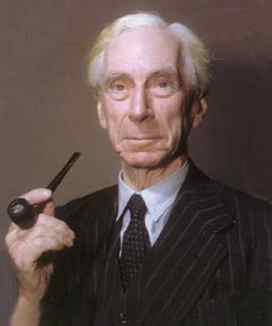 |
| Bertrand Russell |
Religion is based, I think, primarily and mainly upon fear. It is partly the terror of the unknown and partly, as I have said, the wish to feel that you have a kind of elder brother who will stand by you in all your troubles and disputes....A good world needs knowledge, kindliness, and courage; it does not need a regretful hankering after the past or a fettering of the free intelligence by the words uttered long ago by ignorant men.
People cannot bear
not knowing what the future would be. It is true that people are aware of the
fact that they cannot know the future. Their mortality and human frailty
reminds them time and again the size of their brain. And, it is this reminder
that they experience their greatest fear of the Unknown. "What lies in
the future? No, what really lies in the future? I know that I don't
know, but I want to know." Religion provides the consolation
they desire, not the truth.
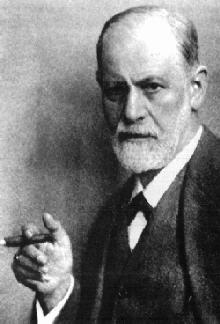 |
| Sigmund Freud |
Another thinker, with a scientific
background, explains this phenomenon. The founder of psychoanalysis, Sigmund
Freud (1856 -1939), delves deeper into the recesses of the human mind, and
discovers the Unconsciousness. Freud argues that much of what we
consciously do is determined by the workings of the unconsciousness. Freud
claims that our so called good intentions are greatly influenced by our most
basic instincts, namely, sex and aggression. In his book, Totem and Taboo,
Freud theorizes the origins of religion. The father of a tribe, whose sons envy
the father's access to the tribe's women, plans out to overwhelm and kill him.
Despite their success, the sons fail to fulfill their desire to emulate their
father, due to competition amongst themselves. Thus, religion arises out of
frustration - to emulate their father - and guilt - for killing the father. The
process is the same for all societies, be they Western or Eastern. Eventually,
in the face of helplessness and guilt, mankind creates a god. In Freud's view,
the 'created' God is a projection of the unconscious mind. This explanation is
based on Freud's observation of children who feel helpless and guilty, and who
needed a figure (figure of authority) to protect them from harsh reality.
Religion, in other words, is a childish delusion.
To put Freud's
theory in another way: all of us, as children, experienced fear in something
that we do not know. We also experience things and people who can harm us. Our
only means of survival is throw ourselves to our father, who appears to us
children as the most powerful, most admirable being in the world. As we grow
up, although we still admire and love and respect our fathers, we have outgrown
the father. But we have never outgrown our fear of the Unknown. We feel the
awesome power of the storm, the earthquake, death. We seek a more powerful
figure of authority, a father figure, the creator of these natural events.
Isn't it a surprise why god is considered a male?
Is
there a way out?
Despite these
philosophical attempts at explaining our 'weekly' observations of people who
cling to god; who go to mass every Sunday; who don't practice what they preach,
is there a way for you, the reader, to free yourself from fear, and to believe in
a god? That is, is it possible for one not to fear the unknown and be able
to believe in a god? Is god real, not a creation of one's mind? Is there a god
apart from me?
But, why believe in
a god? Many, like Bertrand Russell, reason that one should not believe in a god
for religion oppresses his individuality, his freedom to be what he can be.
Should one decide not to believe in a god, just because he does not want to be
oppressed? Should we bet on God's existence?
Blaise Pascal (1623 – 1662) a
Christian apologist argues that, if reason fails you to make up your mind on
whether or not to believe in God, then let us wager. He writes:

 |
| Blaise Pascal |
But there is an
eternity of life and happiness. And this being so, if there were an infinity of
chances, of which one only would be for you, you would still be right in
wagering one to win two, and you would act stupidly, being obliged to play, by
refusing to stake one life against three at a game in which out of an infinity
of chances there is one for you, if there were an infinity of an infinitely
happy life to gain. But there is here an infinity of an infinitely happy life
to gain, a chance of gain against a finite number of chances of loss, and what
you stake is finite. It is all divided; wherever the infinite is and there is
not an infinity of chances of loss against that of gain, there is no time to
hesitate, you must give all...
What have you got
to lose if you decide to believe in God? If you decide not to believe in God,
and should God exists, you lose everything, including immortality of life. If
you decide not to believe in God, and should there be no God, then you lose
nothing. Believe in God, and there is a god, then you win everything, including
immortality of life, and a chance to live in heaven.
Being
Honest
As for me, I'm not
entirely sure that this is the way out. This would not give the peace of mind
that I am looking for. So, let me propose what I think is a way out. Here is
the situation.
Say that I believe in a God because I am
afraid for myself, I seek God's punishment for those who wronged, and because
many people believe in God. Say that I also believe in a God on the basis of a
wager. I die. I become a soul. I see myself rising out of the body, rising
higher and higher, and I see Peter at the gate. I greet him, but he greets me
with book of my life. All that I have done Peter knows, is written in that
book. Peter smiles. He looks up and says, " You have bet on God's
existence. You believed that you believe in Him, because you are afraid for yourself.
And, you follow the rules just as anyone would knowing that he's being watched.
In other words, you are not honest in your belief." Am I then barred from
entering through the gates of heaven because I have been dishonest? I'll leave
that for you to decide.
In another situation, much as I tried, I
could not get myself to believe in God, for that would be dishonest. I die.
There is heaven. There is God. There is Peter waiting for me at the gates of
heaven. He greets me, then he reads the records of my life. Peter knows that I
don't believe in God. But, Peter also knows that I have been fiercely honest
with myself. If peter admires honest people, he should allow me to go through
the gates of heaven. But, does he? I'll leave that for you to decide.
Philosophy
and the issue of God
It would have been a
nice ending to our spiritual journey if there indeed is a God, and I have been
honest about believing in a supreme being. But that would be wishful thinking
on our part. We are serious. We took up this issue because it matters a lot to
us. Unlike the others who question God out of anger or resentment, we decided
to take up the issue because we desire to know. We may not come to know THE Truth,
but at least we are sincere, because we are driven by our desire for truth.
Wednesday, November 16, 2011
God and Theory of Evolution: Can they co-exist?
 To say that 2 or more things coexist with one another is to assume that they're both on the same level. Oil and water don't mix, but they coexist. They're both natural products. People of different religion can be said to coexist. Despite the differences in beliefs and practices, they live in harmony within a city such as
 But what about God and the idea that living things evolve from previous living things now extinct? Well that depends on what you mean by those terms, especially the term 'God'. Let's first look at what science and scientists do.
Scientists study the behavior of things in nature. They busy themselves only with problems and issues that can be verified to be true or false. Scientists study what can be observed by the naked eye or what can be inferred from observations and experiments. Paleontologists, for instance, study bones of extinct animals; and although they may find some similarities with the ones that are living, as scientists, they cannot jump to the conclusion that there indeed was an evolution. Evolution is a theory. As such, it cannot be proven. But, unlike creationism, evolution theory has a stronger explanatory power. Unfortunately, it has been treated by many scientists and laymen alike as if it were a scientific fact that can be observed by the naked eye. If that were so, then there would not have been a debate between defenders of evolution and creationism (which is another theory).
What then is the use of a theory if it is not a scientific fact? A theory is used to make sense of the facts gathered and studied. However, to be true to the spirit of science, scientists should be ready to let go of a theory when there are too many facts that will eventually contradict it. But, so far, there aren't that many facts that could damage the theory of evolution.
 What about the term 'God'? As you probably are aware, there are many notions of God. The mystics' notion of God is so different from the ordinary man's notion of God that the ordinary man, except the mystic and highly developed spiritual persons, wouldn't even be able to recognize it as his God. This is so because the God for the mystics can't be talked about it. God has no name. But more surprisingly, God is not even a being. For a being to be a being, a being is limited and defined. And if anything can be defined, it can be given a name and possibly be studied. Mystics believe that we can only infer what God is, but not directly know what God is. Note that language is always talking about or is referring to being. We use 'is' in all our sentences. Peter IS tall. Peter IS there, Peter IS sad. But what can be said about God? Language cannot talk about God as God without corrupting the essence. Mystics are mostly quiet about God when asked what HE IS. The best that language (or, human beings) can do to refer to God is to say that "God who is not a being, is the ground of all beings for them to exist".
The other notion of God is the literal one that many believe God to be. He is being that lives above earth (in heaven); is seated on a throne; is all powerful, all knowing (knows the past, the present, and the future all in one instant); is spirit; and does special favors to those who believe in Him. And, he has a gender. He loves, can get angry and jealous at times; and creates the world at a certain time and place. And since He is endowed with perfect knowledge of things, living and non living, there is no need for him to revise what He has created a long time ago. Whatever He creates is perfect. With such a notion of God, there can be no room for a theory of evolution. If you believe in such a God, there can be no coexistence between God and the theory of evolution. You'll have to side with creationism.
There are many more notions of God. For instance, pantheism, a metaphysical belief that God is All, as All is God; and, panentheism, the belief that God is in All as All is in God. That is, God is immanent in things (hence, things are mirrors of God); while God is not identifiable with one or any of the things. For God is the ultimate source of things, God transcends things. That is, God is beyond things.
Surely, the pantheistic or the panentheistic or even the mystic's notion of God will have no problem with the theory of evolution. It can be said that, since God is not a Being (but the Ground of beings for beings to even exist), then natural things that evolved exist because God is their Ground. Or, the ever evolving of things (to come) is an expression of the creativity of God who is forever creating. However - and it is for this reason that debates on this issue will never be resolved - compatibilities between the layman's notion of God and theory of evolution will forever be a case of oil and water: they don't mix; but unlike these natural things, they can't coexist. What do you think?
Tuesday, November 15, 2011
Jesus was "Out of Touch with Reality"
Of all the teachings of Jesus Christ, the very best and the one that gives life to all his teachings and practices, is “Love Thy Enemy.”
Love your God, he says, with all one’s heart and mind and soul. To do so, you should also love your enemy. Otherwise, it is meaningless and hypocritical of you.
 "They" say: Love your neighbor. That’s easy because your neighbor shares the same likes and dislikes (perhaps, even biases and prejudices). No effort in linking up with her. But, if there's no effort, then there's little or no moral value in loving a neighbor. Former US president Bush and Bin Laden love their kinds, but hate their enemies.
Loving your enemy is the greatest act of love - following Jesus's line of thinking and life. It demands that you put aside your biases and prejudices, and reach out to the one who holds different views and beliefs. In that case, Loving one’s enemy is an extreme act of self sacrifice, for love is an expression of self sacrifice.
If you truly love God, then the best way to show that is to love one’s enemy. But, if you think that’s too idealistic, too impractical - way out of touch with reality - too idiotic, then stop pretending to believe in Jesus Christ. He's way out of touch with reality; and you claim not to be.
Or, is he?
Who is out of touch with reality, Jesus or you?
Love your God, he says, with all one’s heart and mind and soul. To do so, you should also love your enemy. Otherwise, it is meaningless and hypocritical of you.
"They" say: Love your neighbor. That’s easy because your neighbor shares the same likes and dislikes (perhaps, even biases and prejudices). No effort in linking up with her. But, if there's no effort, then there's little or no moral value in loving a neighbor. Former US president Bush and Bin Laden love their kinds, but hate their enemies.Loving your enemy is the greatest act of love - following Jesus's line of thinking and life. It demands that you put aside your biases and prejudices, and reach out to the one who holds different views and beliefs. In that case, Loving one’s enemy is an extreme act of self sacrifice, for love is an expression of self sacrifice.
If you truly love God, then the best way to show that is to love one’s enemy. But, if you think that’s too idealistic, too impractical - way out of touch with reality - too idiotic, then stop pretending to believe in Jesus Christ. He's way out of touch with reality; and you claim not to be.
Or, is he?
Who is out of touch with reality, Jesus or you?
Subscribe to:
Posts (Atom)