Showing posts with label philosophy. Show all posts
Showing posts with label philosophy. Show all posts
Sunday, May 6, 2012
Philosopher: The misunderstood being, but a happy one.
Colin McGinn, in his Philosophy By Another Name, does not like to be called a philosopher anymore. He wants to change his title to 'onticist.
It is a valid concern that I, too, had dealt with a long time ago when I taught philosophy. My concern with this issue was more of what do philosophers really do.
I like science. It would not be wise to ignore science and its discoveries of the world in which we live. But, I would be cautious to not use a particular science as a model for philosophizing. Philosophy had once committed the mistake of trying to model after the physical science. And, that to me, was the beginning of Western philosophers' identity crisis in the last 500 years.
I like literature because the novelists write about the universal conditions of human existence. Philosophers would be wisely advised to take up literature.
Where does philosophy come into the picture?
This is not the right place to write an exhaustive treatise on what philosophy is and what it has to do with science and literature. Nonetheless, I will to spell out a general outline as to what I think philosophy is.
Colin McGiinn is right in saying that philosophy is the only discipline that deals with the general nature of being. Recall the great metaphysicians like Plato, Aristotle, Heidegger and, may I add, Derrida and Levinas (I know that some of you who are acquainted with the last two may disagree with me), and in the East, Lao Tzu.
They all deal with the nature of being: that is, they explore the original relationship between consious being and Being.
Let us put it this way: scientists have devised a way to approach and study the world. It is called the scientific method. Novelists feel more and are very self consious of their feelings and the experiences of the others. This is why they write about love, suffering, the meaning of life.
Scientists adapt a certain mode of thinking that formulated the scientific method. What scientists do not consider to be part of their study is their very mode of thinking that hides and is determined by their fundamental assumptions about being.
Novelists, too, have a fundamental attitude towards Being (themselves and their fellow human beings and nature). However, they do not study the nature of that fundamental attitude that determines their approach and their relationships with themselves and their fellow human being.
The study of these fundamental approaches and attitudes, to me, is that concern that properly belongs to philosophy (or, in the words of Colin MGinn, 'ontics'). And, to best understand 'the general nature of being' the philospher (i.,e onticist), must, in the words of Plato, be interested in everything, from science and literature. Philosophers must stay in touch with these discplines. Otherwise they would be studying empty shells of Being.
Question: why do you philosophize?


Monday, March 5, 2012
Philosophical Cause Of Suffering and Injustice
When
you adopt a certain way of making sense of reality, you stick to it as
long as you can. There may be several notions of truth about the self
and life in general. But, you have chosen to believe in a certain notion
of truth. Why? Because it is your need to believe that there is only
one way of making sense of yourself and the world. It is comfortable. It
protects you from certain beliefs that you can't get yourself to accept. They cause great discomfort when the world won't agree with your understanding of how the world should be.
This is your understanding of what reality is, what your place is in this world, how the other should relate to you, how you relate to your joys and fears. Seriously questioning your understanding is almost as good as giving up on life. For some, they decide to end their lives.
I think that the most destructive way of thinking about yourself and the world is to place yourself as the center of Reality. In this scenario, you are the arbiter of what is true and what is false, what is good and what is wrong. I am not just talking about being selfish. I am referring to a kind of thinking that runs so deep that it is very hard to notice that you have actually promoted yourself to being the center of reality.
Take for instance the philosophy of Rene Descartes. Descartes was looking for the truth. In fact he was yearning for something that was beyond absolute doubt. During his investigation, he doubted the senses and anything that the senses tell him about the world. He doubted God’s existence and morality (eventually, he was able to restore God in his philosophy). He doubted science. There was, however, one thing that he couldn’t doubt. And that was his existence. The fact that he is thinking, he exists. The fact that he exists, he is thinking. His existence and as a thinking thing were so intertwined, like inseparable Siamese twins, that neither of them could exist without the other. What sort of thinking did he believe defined his existence? It was reason. Or the way he understood reason: whatever rational arguments or conclusions he formed, they must first and foremost satisfy and comfort his self. They must keep him protected from further confusion, doubt, discomfort. That is, whatever he undertakes to understand, ‘it’ must make sense to him. If ‘it’ cannot acquiesce to his way of understanding things, then ‘it’ will be discarded. ‘It’ will be treated as though it is irrational, worse, false.
Let us step back from this scenario, and ask these important questions:
This is your understanding of what reality is, what your place is in this world, how the other should relate to you, how you relate to your joys and fears. Seriously questioning your understanding is almost as good as giving up on life. For some, they decide to end their lives.
I think that the most destructive way of thinking about yourself and the world is to place yourself as the center of Reality. In this scenario, you are the arbiter of what is true and what is false, what is good and what is wrong. I am not just talking about being selfish. I am referring to a kind of thinking that runs so deep that it is very hard to notice that you have actually promoted yourself to being the center of reality.
Take for instance the philosophy of Rene Descartes. Descartes was looking for the truth. In fact he was yearning for something that was beyond absolute doubt. During his investigation, he doubted the senses and anything that the senses tell him about the world. He doubted God’s existence and morality (eventually, he was able to restore God in his philosophy). He doubted science. There was, however, one thing that he couldn’t doubt. And that was his existence. The fact that he is thinking, he exists. The fact that he exists, he is thinking. His existence and as a thinking thing were so intertwined, like inseparable Siamese twins, that neither of them could exist without the other. What sort of thinking did he believe defined his existence? It was reason. Or the way he understood reason: whatever rational arguments or conclusions he formed, they must first and foremost satisfy and comfort his self. They must keep him protected from further confusion, doubt, discomfort. That is, whatever he undertakes to understand, ‘it’ must make sense to him. If ‘it’ cannot acquiesce to his way of understanding things, then ‘it’ will be discarded. ‘It’ will be treated as though it is irrational, worse, false.
Let us step back from this scenario, and ask these important questions:
- Is it fair to force reality to make sense to you?
- Just because something does not make sense to you, is it fair to say that it is false or morally wrong?
- If you always want to see your partner not as he or she is, but as what he or she is for you, is that fair?
- Just because it is logical for you, but not logical for the other, is it fair to judge him or her as being wrong and hard headed?
Monday, December 12, 2011
Free Will or Freedom?
Does free will exist? Is it
an uncaused cause?
It sure feels like I have a free will. I don’t feel coerced
to doing something that I don’t want to do. If I were coerced then I would rationalize that
my free will has been curtailed by an external force. Curtailed, yes, but not
taken away, for free will, it is assumed, is innate.
However, psychologists and philosophers have become quite wary about our ‘feeling
that we are free’. In “Is Free Will an Illusion?” Shaun Nichols writes:
Yet psychologists widely agree that unconscious processes exert a powerful influence over our choices. In one study, for example, participants solved word puzzles in which the words were either associated with rudeness or politeness. Those exposed to rudeness words were much more likely to interrupt the experimenter in a subsequent part of the task. When debriefed, none of the subjects showed any awareness that the word puzzles had affected their behavior. That scenario is just one of many in which our decisions are directed by forces lurking beneath our awareness.
This argument is not
new. In the 20th century, Behaviorism revealed that those ‘forces
lurking under our awareness’ were determined by operant conditioning. If one
was to be exposed to certain stimuli again and again, one would react in a
certain way again and again. One's behavior would become a ‘habit’ and it would feel as though
there were no external forces curtailing one’s sense of freedom.
We could spend the
whole time arguing for and against the existence of free will. But, hasn’t
anyone yet realized that whatever the outcome, it does not really matter? Whether this argument or that argument could
show you – its validity, it is still an argument that has no proof or hard evidence.
Here’s what I know:
I value freedom because I value human dignity. Humans fought against slavery
because they are subjects, beings of intrinsic values. They are values in
themselves. I don’t just believe in these ideas; I see actual people standing
up for themselves, fighting and defending their rights, their human
dignity. And, when they retain and
regain their human dignity, they are free.
So rather than saying that you have a free will (innate), why not describe freedom as an act? Wouldn't you feel that you have accomplished something valuable when you succeeded in overcoming an obstacle, be it physical or psychological, or spiritual? Let us think about it. For as long as you view freedom as an act of overcoming a resistance, then you will stand up and do something about your situation rather than enjoy complaining about 'how hopeless your situation is'.
So rather than saying that you have a free will (innate), why not describe freedom as an act? Wouldn't you feel that you have accomplished something valuable when you succeeded in overcoming an obstacle, be it physical or psychological, or spiritual? Let us think about it. For as long as you view freedom as an act of overcoming a resistance, then you will stand up and do something about your situation rather than enjoy complaining about 'how hopeless your situation is'.
Saturday, December 3, 2011
The Living Truth
Truth is very difficult to define. So let us take up some examples of truth, or of how we use the word, 'truth.'
Mathematical truth. "Two plus two" is equal to "four." We say this is true. The opposite is false when we say "two plus two" is equal to "three."
Empirical truth. If I say "I have an elephant in my shirt pocket', then it is false because it is an empirical fact that there is no elephant in my shirt pocket. It is a fact and true when I say that there is a pen in my shirt pocket. This is an empirical truth because anyone, not just me, can see that there is a pen in my shirt pocket.
Biblical truth. If I say that "Christ is merely a man, not a son of God," then it is false because Christians believe that Christ is the Son of God, born without sin. While mathematical truth is based on logic, and empirical truth is based on the senses, biblical truth is based on one's faith. We can say that different truths have different bases.
There is another meaning of truth that is not necessarily based on the aforementioned. This truth is derived from, and created by, one's life. It is a truth that enables one to realize more of his or her nature and destiny. However, this truth is extremely difficult - and, at times, dangerous -to discover because it requires that one has to first accept one's ignorance, that is, that one does not know everything. Not everyone is willing to accept one's weaknesses. Everyone likes to know his or her strengths. Everyone wants to show off his or her strengths. Unfortunately, many cringe at the sight of their weaknesses. Knowing their weaknesses are actually a big step to knowing their selves. It takes moral courage to face them.
Many of us are afraid to know the 'dark side' of one's personality because we have something to hide from the others especially from ourselves. Through the years, we have built up an image of ourselves that we show to other people and to ourselves. This is a false image, a pretension. And it takes so much time and energy to keep up that façade that we actually become weary and stressed out. Furthermore, we become defensive when we sense that people can see through the façade (mask). The more masks we wear, the more we don't know ourselves; and the more we become ignorant and arrogant.
Why do we wear masks? Why do we lie to ourselves and to the others? We lie because we depend on the approval of the others. We want people to like us. There is nothing wrong with that. But, people might like us for the wrong reasons. And worst of all, we might love ourselves for the wrong reasons.
How do we free ourselves from all of these wrong reasons? How can we allow others to accept us for who we are? The answer is to first accept who we are. So, when we have humbly accepted our strengths and embraced our weaknesses, people will (eventually) accept and respect us for who we are. As a result, the truth about who we are sets us free to be who we are and can be.
Monday, November 21, 2011
Philosophy, God, and Honesty
Fear, Vengeance, and Conformity
Some of us had the
misfortune of questioning the existence of God. I say misfortune because
questioning the existence of God can cause stress and anxiety, but more
importantly, a loss of innocence. One wished one had not been too aware of the
contradiction between what people believe in and what they do. They believe in
a God that is all good, and that teaches to do good even to our enemies. Yet,
those same believers do the very opposite as soon as they step out of the
church. One wished one had not been aware of the discrepancy. For that leads to
other questions that could threaten their peace of mind.
For instance, one
asks: "Why do I have to go to mass? It does not make sense to me. We
follow those rituals and people kneel and mutter words 'Our Father who art in
heaven...' without truly understanding the meaning."
One observes that
people go to mass because it is Sunday, and we, Filipinos, are predominantly Catholic; and not going to mass will cause bad karma.
One observes people
praying for their safety, and the assurance that their future would be exactly
what they had prayed for: protection from murderers, untimely accidents; and
financial stability. If they are into lottery, they pray hard to win $20,000,000
at least that could secure their financial for the rest of their lives.
One observes that
the priests and religious laymen claim to have a special access to God's mind:
they know, with great certainty, what God has in His mind. And, given that,
they privileged themselves with the power to command loyalty from their own
fellowmen. They are also sure that other religions are inferior to the Catholic
faith that they lambast the non-Chrisitian for not accepting Jesus Christ as
their one and only savior.
You turn on the
t.v. to a channel you did not intend. But, you stay on for awhile because the
t.v. evangelist was talking about how God can provide you the money you could
have ever dreamed for, if only you pray for it. Seek and shall be yours. Ask
for money from God, you'll get it.
You notice, too, that many of those who
take religion seriously are those who are 'young at heart'. They feel their
body aching every day. Gone were the days when they could jump and feel no
pain. Pain reminds them of their frailty, of their mortality. "Life is
short', they say, 'but I do not want to believe that this earthly life is all
there is. There must be something else, something beyond the grave"
In other words, you
notice that people believe in angels and devils and in a supreme god out of
fear, vengeance, and conformity. And, you wished that you had not been too
aware of this. Innocence is sweet, and peaceful. Yes, you feel physical pain
when you accidentally trip and fall to the ground; but you don't lose sleep
over it because 'it's a small thing'. You can recover from it. However, the
loss of innocence targets your heart and mind. The pain you feel is not
physical, but emotional and mental. It does not go away that easily. Sometimes,
it does not go away. For some, it never does. That's because you, too, once
believed out of fear, vengeance, and conformity. You should have been like
'everybody else.'
Philosophical
explanations
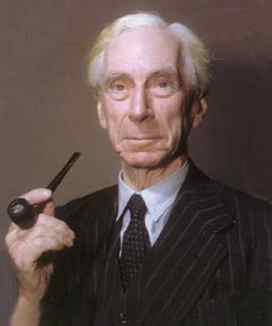
Bertrand Russell (1872 - 1970) was a
mathematician, logician, political theorist, educationist, ethicist, and
a social critic. He is an atheist, who once was a Christian believer. In his
book, Free Man's Worship, he writes:


 |
| Bertrand Russell |
Religion is based, I think, primarily and mainly upon fear. It is partly the terror of the unknown and partly, as I have said, the wish to feel that you have a kind of elder brother who will stand by you in all your troubles and disputes....A good world needs knowledge, kindliness, and courage; it does not need a regretful hankering after the past or a fettering of the free intelligence by the words uttered long ago by ignorant men.
People cannot bear
not knowing what the future would be. It is true that people are aware of the
fact that they cannot know the future. Their mortality and human frailty
reminds them time and again the size of their brain. And, it is this reminder
that they experience their greatest fear of the Unknown. "What lies in
the future? No, what really lies in the future? I know that I don't
know, but I want to know." Religion provides the consolation
they desire, not the truth.
 |
| Sigmund Freud |
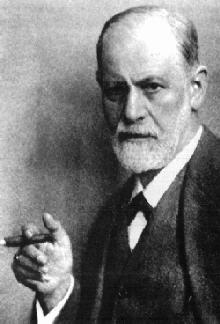
Another thinker, with a scientific
background, explains this phenomenon. The founder of psychoanalysis, Sigmund
Freud (1856 -1939), delves deeper into the recesses of the human mind, and
discovers the Unconsciousness. Freud argues that much of what we
consciously do is determined by the workings of the unconsciousness. Freud
claims that our so called good intentions are greatly influenced by our most
basic instincts, namely, sex and aggression. In his book, Totem and Taboo,
Freud theorizes the origins of religion. The father of a tribe, whose sons envy
the father's access to the tribe's women, plans out to overwhelm and kill him.
Despite their success, the sons fail to fulfill their desire to emulate their
father, due to competition amongst themselves. Thus, religion arises out of
frustration - to emulate their father - and guilt - for killing the father. The
process is the same for all societies, be they Western or Eastern. Eventually,
in the face of helplessness and guilt, mankind creates a god. In Freud's view,
the 'created' God is a projection of the unconscious mind. This explanation is
based on Freud's observation of children who feel helpless and guilty, and who
needed a figure (figure of authority) to protect them from harsh reality.
Religion, in other words, is a childish delusion.
To put Freud's
theory in another way: all of us, as children, experienced fear in something
that we do not know. We also experience things and people who can harm us. Our
only means of survival is throw ourselves to our father, who appears to us
children as the most powerful, most admirable being in the world. As we grow
up, although we still admire and love and respect our fathers, we have outgrown
the father. But we have never outgrown our fear of the Unknown. We feel the
awesome power of the storm, the earthquake, death. We seek a more powerful
figure of authority, a father figure, the creator of these natural events.
Isn't it a surprise why god is considered a male?
Is
there a way out?
Despite these
philosophical attempts at explaining our 'weekly' observations of people who
cling to god; who go to mass every Sunday; who don't practice what they preach,
is there a way for you, the reader, to free yourself from fear, and to believe in
a god? That is, is it possible for one not to fear the unknown and be able
to believe in a god? Is god real, not a creation of one's mind? Is there a god
apart from me?
But, why believe in
a god? Many, like Bertrand Russell, reason that one should not believe in a god
for religion oppresses his individuality, his freedom to be what he can be.
Should one decide not to believe in a god, just because he does not want to be
oppressed? Should we bet on God's existence?
Blaise Pascal (1623 – 1662) a
Christian apologist argues that, if reason fails you to make up your mind on
whether or not to believe in God, then let us wager. He writes:

 |
| Blaise Pascal |
But there is an
eternity of life and happiness. And this being so, if there were an infinity of
chances, of which one only would be for you, you would still be right in
wagering one to win two, and you would act stupidly, being obliged to play, by
refusing to stake one life against three at a game in which out of an infinity
of chances there is one for you, if there were an infinity of an infinitely
happy life to gain. But there is here an infinity of an infinitely happy life
to gain, a chance of gain against a finite number of chances of loss, and what
you stake is finite. It is all divided; wherever the infinite is and there is
not an infinity of chances of loss against that of gain, there is no time to
hesitate, you must give all...
What have you got
to lose if you decide to believe in God? If you decide not to believe in God,
and should God exists, you lose everything, including immortality of life. If
you decide not to believe in God, and should there be no God, then you lose
nothing. Believe in God, and there is a god, then you win everything, including
immortality of life, and a chance to live in heaven.
Being
Honest
As for me, I'm not
entirely sure that this is the way out. This would not give the peace of mind
that I am looking for. So, let me propose what I think is a way out. Here is
the situation.
Say that I believe in a God because I am
afraid for myself, I seek God's punishment for those who wronged, and because
many people believe in God. Say that I also believe in a God on the basis of a
wager. I die. I become a soul. I see myself rising out of the body, rising
higher and higher, and I see Peter at the gate. I greet him, but he greets me
with book of my life. All that I have done Peter knows, is written in that
book. Peter smiles. He looks up and says, " You have bet on God's
existence. You believed that you believe in Him, because you are afraid for yourself.
And, you follow the rules just as anyone would knowing that he's being watched.
In other words, you are not honest in your belief." Am I then barred from
entering through the gates of heaven because I have been dishonest? I'll leave
that for you to decide.
In another situation, much as I tried, I
could not get myself to believe in God, for that would be dishonest. I die.
There is heaven. There is God. There is Peter waiting for me at the gates of
heaven. He greets me, then he reads the records of my life. Peter knows that I
don't believe in God. But, Peter also knows that I have been fiercely honest
with myself. If peter admires honest people, he should allow me to go through
the gates of heaven. But, does he? I'll leave that for you to decide.
Philosophy
and the issue of God
It would have been a
nice ending to our spiritual journey if there indeed is a God, and I have been
honest about believing in a supreme being. But that would be wishful thinking
on our part. We are serious. We took up this issue because it matters a lot to
us. Unlike the others who question God out of anger or resentment, we decided
to take up the issue because we desire to know. We may not come to know THE Truth,
but at least we are sincere, because we are driven by our desire for truth.
Subscribe to:
Posts (Atom)